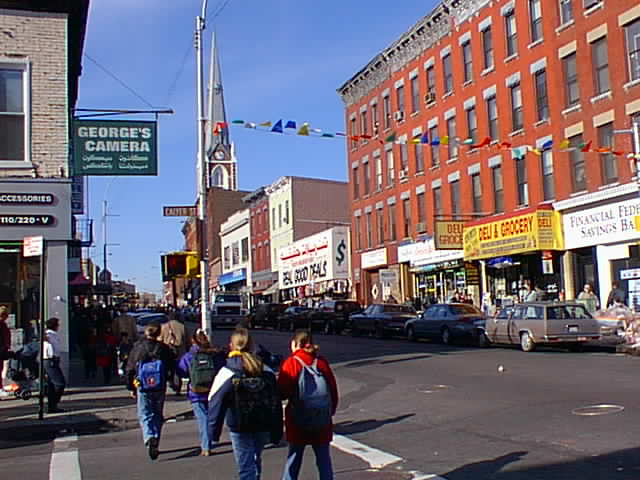
 Manhattan Ave at Calyer St. 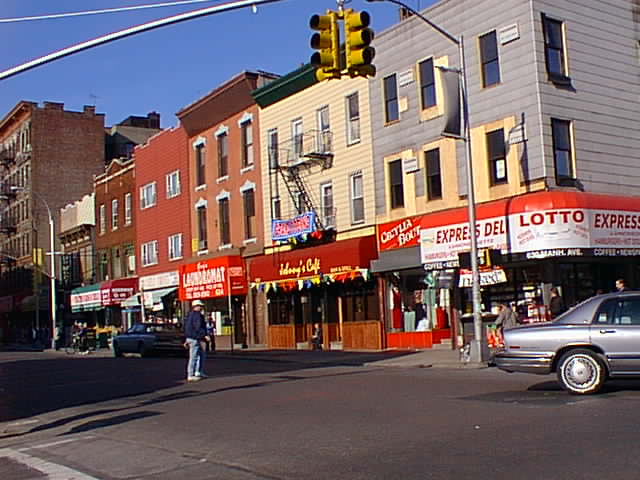 Manhattan Ave at Nassau Ave 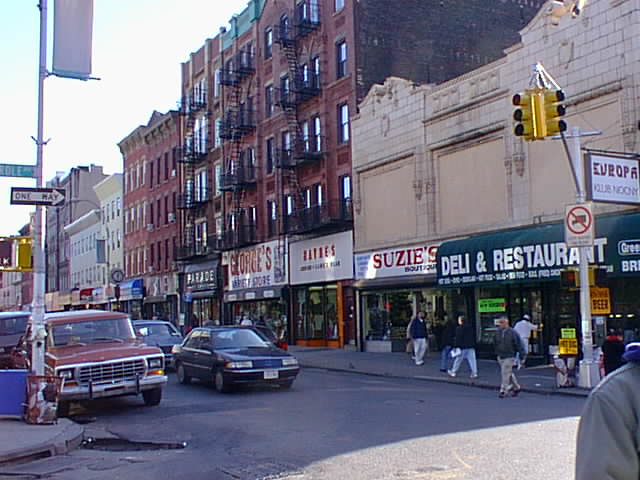 Manhattan Ave at Meserole Ave |
STREET NAME ORIGINS: GUERNSEY STREET - Opened in 1852, probably named after Doctor Egbert Guernsey, founder of The Williamsburg Daily Times. CALYER STREET - Named after Jacobus Calyer, head of one of the 5 farm families of early Greenpoint. KENT STREET - Opened in 1852, named after a noted jurist and first professor of Law at Columbia College and Chancellor of The New York Court of Chancerey, James Kent (1763-1847). LORIMER STREET - Named after James Lorimer Graham who along with his brother was an active real estate developer in Williamsburg. MILTON STREET - May have been named after a successful manufacturer of sailing materials, Daniel Milton who lived in the area. Milton Street was also opened in 1852. NOBLE STREET - Named after the 1842 Trustee of The Village of Williamsburg , James Noble. |
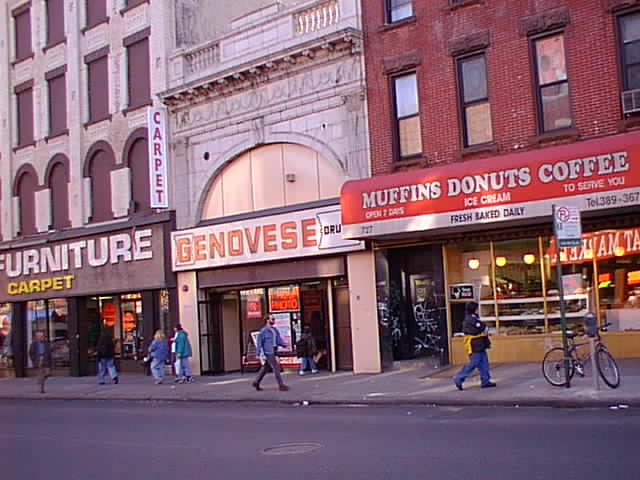 The Site of The Meserole Theater |
Now the site of a Genovese Drug Store, once home to the magnificent Meserole theater. Greenpoint was once the home a many movie houses, including: The RKO Greenpoint, The Crystal, The American, The Nassau, The Midway, The Winthrop, The Garden, The Chopin, and of course the beloved Meserole Theater. Named in honor of one of the first of the five Greenpoint families. The Meserole family erected a big white house that contained 16 large rooms. Their property was bordered by Manhattan Avenue, Norman Avenue, Meserole Avenue, and Lorimer Street. It was on this site where picnics and Sunday services were held. |
 Milton Street Landmarks |
A row of landmark homes on Milton
Street. Greenpoint's small designated Historic District is bounded roughly by Java,
Leonard, Calyer and Franklin Streets. The District is just off the main shopping strip on
Manhattan Avenue. It contains a number of simple but charming 19th-Century rowhouses.
There are also some wooden frame houses in the area. In many cases, they were built by
ship's carpenters. |
 The Monitor Memorial  The Continental Iron Works |
The famous civil war ship, The Monitor was built in Greenpoint on the pier located on Calyer Street and West by John Ericsson, 1861/1862. In 1861 Abraham Lincoln signed an order to construct the Monitor. It was built by Continental Iron Works at Calyer and West Street in 101 days. The "Yankee cheese box on a raft" slid off the ways on January 30, 1862, for its famed encounter with the Confederate armored ram Merrimac on March 9 of the same year, a victory that ushered in the era of the iron ship. The Monitor Memorial, in Winthrop Park, Monitor Street between Nassau and Driggs Avenues, depicts an heroic-size bronze figure tugging at a hawser. Designed by Antonio de Filippo, it was erected in 1938. |
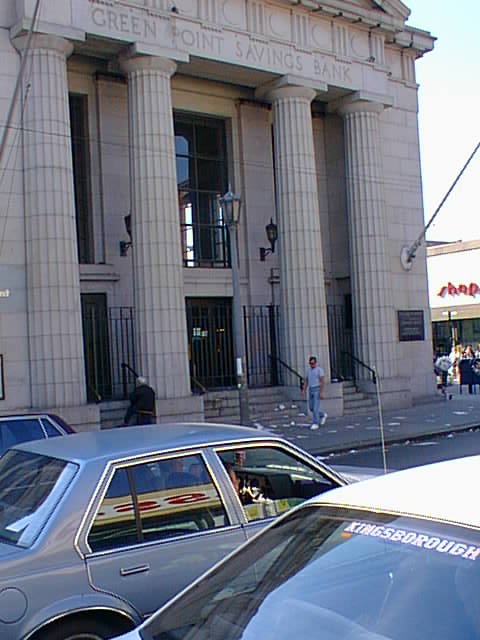 Greenpoint Savings Bank |
In 1868, the community group applied to the New York State legislature to establish The Green Point Savings Bank. A charter for the new institution was issued on April 16, 1868, and the bank opened for business on January 11th of the following year. The bank's original board included Thomas F. Rowland of the Continental Iron Works (which produced the first iron-clad ship, the Monitor); Neziah Bliss, Greenpoint's largest landowner at the time; Thomas C. Smith of the Union Porcelain Works; and Archibald K. Meserole, a descendant of one of Greenpoint's original settlers. The original bank occupied the ground floor of a small two-story frame building at Franklin and Oak streets - Franklin was the main thoroughfare of the community at the time and William H. Meserole was the bank's first president. During its first year in operation, the bank collected about $135,000 in deposits then grew steadily over the next decade, successfully weathering one of the worst depressions in the nation's history. As the community grew, the focal point of the economy moved to Manhattan Avenue, and the bank - now with more than $750,000 in deposits - moved with it in 1880, occupying a building on Manhattan Avenue near Milton Street. By 1885, the bank had grown to nearly $1.5 million in deposits, when it was destroyed by a fire. To continue service to customers, a temporary bank location was set up at 127 Greenpoint Avenue, then moved to Manhattan Avenue and Noble Street in 1887. In 1905, with deposits having grown to more than $5 million, the bank purchased property at Manhattan Avenue and Calyer Street to erect a new building that would serve solely as the headquarters of the bank. That location opened in 1908 and quickly became a local landmark.The first Greenpoint Savings bank customer was "signed up" on January 11, 1869. |
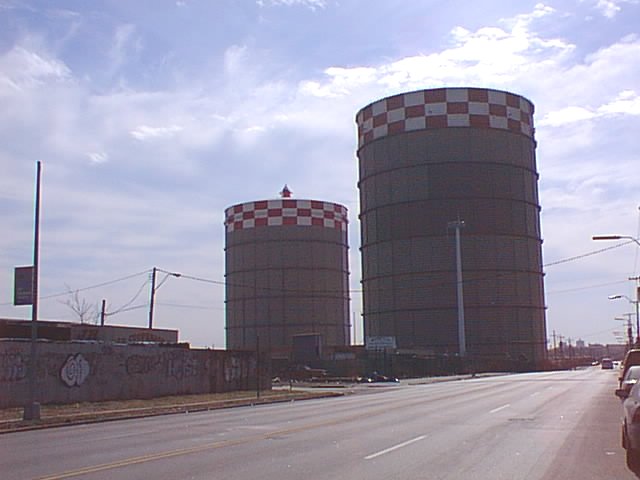 The Tanks |
What could we say - another Greenpoint Landmark known as "The Tanks" |
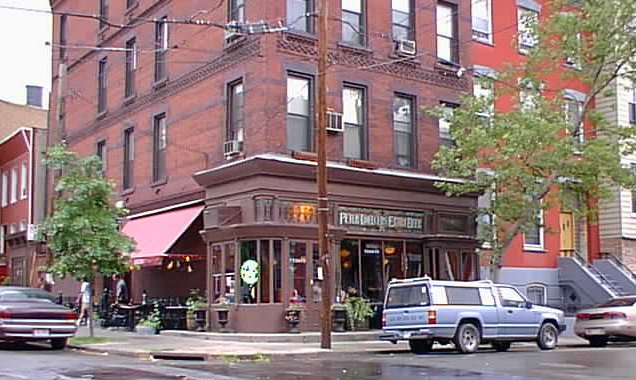 The Changing face of the North Side |
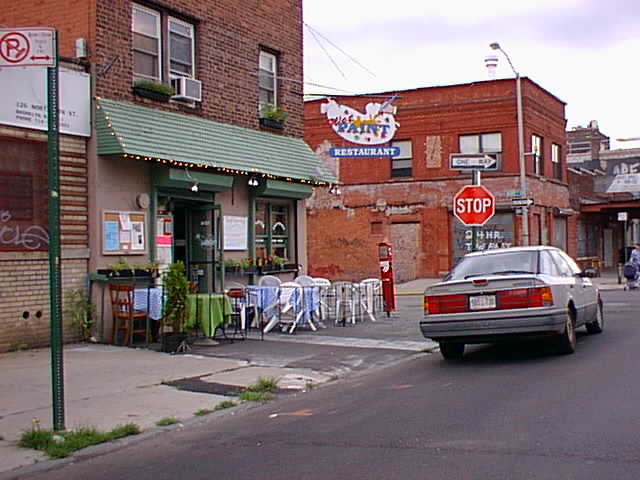 Outdoor dining in Greenpoint's Northside |
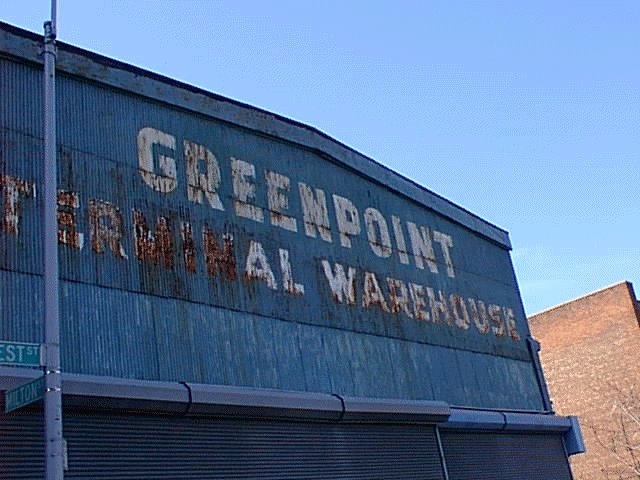 The Site of the once bustling Greenpoint |
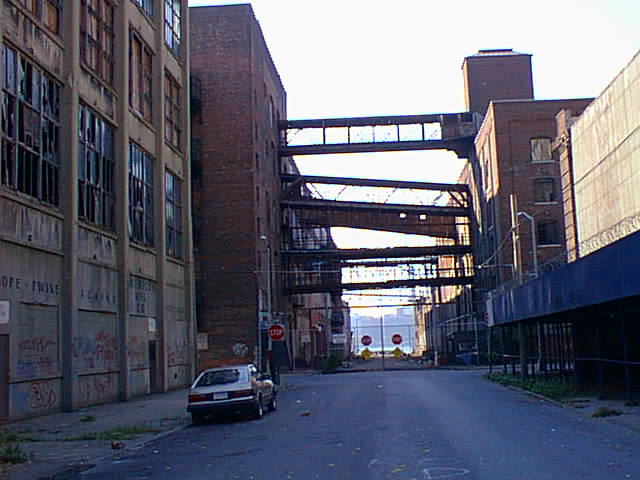 Terminal Warehouse on West Street |
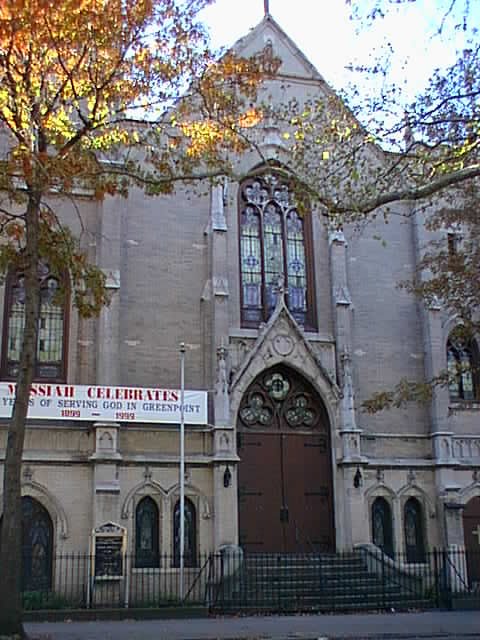 Messiah Church - Russell Street |
Messiah church, known as "The
friendly Church" was organized on October 30, 1899. A young pastor, the Reverend
Samuel Trexler, was called to establish a congregation of English speaking Lutherans in Greenpoint. At that time Greenpoint had a number of Lutheran Churches, but each served a different ethnic group - Norwegian, Swedish, German and Danish. But there was none for persons whose primary language was English. Reverend Trexler's efforts were fruitful and a small group of worshippers held their first service in the rear of a store on Humbolt Street and Norman Avenue. Growth of the Church was steady and it was determined that a permanent home was necessary. In 1905, the cornerstone of the present building was laid. |
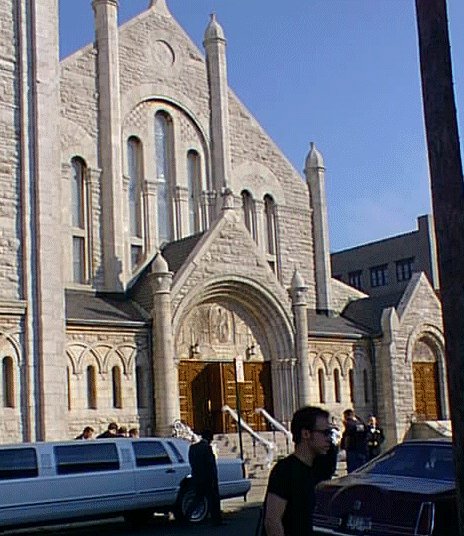 St Cecilia's |
 St Anthony's |
